

Can a Meniscus Tear Heal on Its Own?
A knee injury can bring your active lifestyle to a sudden halt. Whether you are a weekend warrior who twisted a knee on the netball court or someone managing the gradual wear and tear of daily life, a meniscus tear diagnosis often brings up a big question: Can a meniscus tear heal on its own?
If you are hoping to avoid surgery, we have some good news. Not all meniscus tears require an operation. Depending on the specific location and type of your tear, conservative management might be all you need to get back on your feet. However, natural healing is not a guarantee for every knee injury.
In this comprehensive guide, we will walk you through exactly how the meniscus heals, which tears are most likely to recover without surgery, and what you can do to support your knee during the rehabilitation process.
The Short Answer: It Depends on Blood Supply
Does a torn meniscus always require surgery? Absolutely not. But whether your meniscus can heal naturally comes down to a simple matter of human anatomy: blood supply.
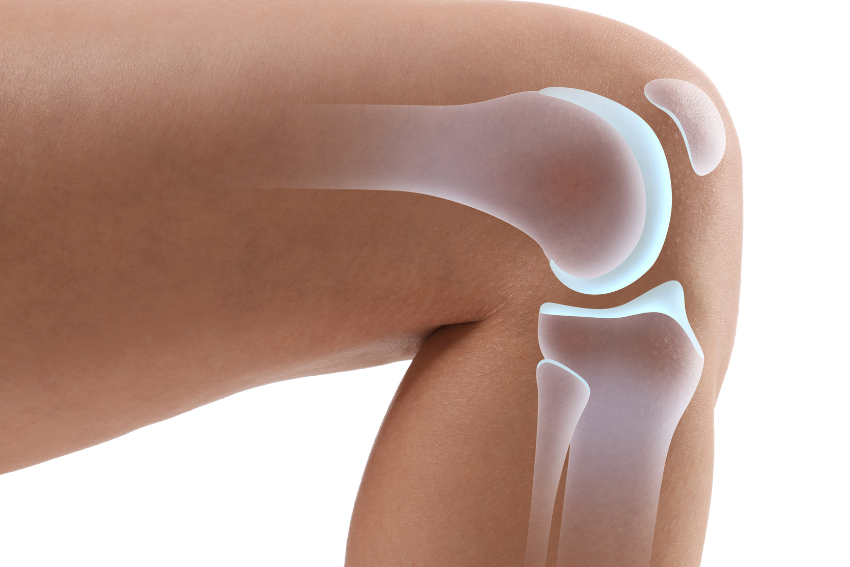
Your meniscus is a C-shaped piece of tough, rubbery cartilage that acts as a shock absorber between your shinbone and thighbone. Each of your knees has two of these cartilages. For any tissue in your body to heal after an injury, it needs a steady flow of blood to deliver oxygen and essential nutrients.
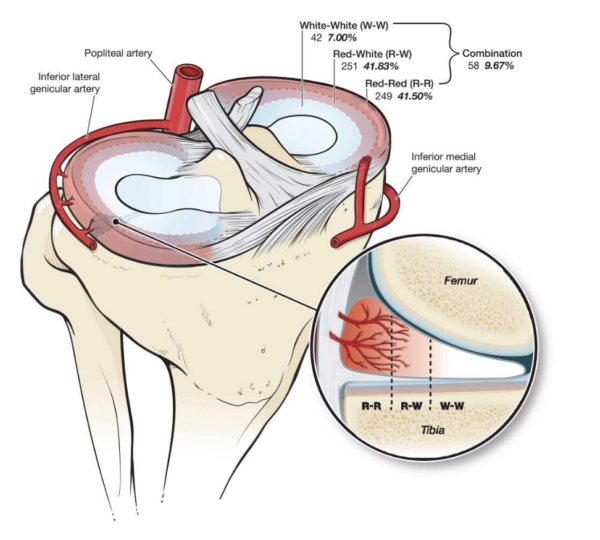
The challenge with the meniscus is that it lacks a uniform blood supply. Medical professionals divide the meniscus into zones based on the extent of blood exposure. Understanding these zones is the first step toward determining whether your knee can recover without surgical intervention.
The “Red Zone” vs. The “White Zone”
Orthopaedic specialists look closely at where your tear is located to determine your best treatment path:
- The Red Zone (Outer Third): The outer edge of the meniscus has a rich blood supply. Because of this healthy circulation, a tear in the red zone has a very good chance of healing on its own with proper rest and rehabilitation. If your tear is small and sits entirely within this vascular area, conservative treatment is can be successful.
- The Red-White Zone (Middle Third): This middle section has some blood supply, but not a lot. Tears in this transitional area sit in a grey area. They might heal naturally, but they often struggle to mend completely without some form of medical help.
- The White Zone (Inner Two-Thirds): The inner portion of the meniscus lacks a direct blood supply entirely. It relies on the fluid within the knee joint for its basic nutrients. Because there is no blood flow to bring healing cells to the area, a tear in the white zone simply cannot heal on its own.
Add info about the lateral meniscus being closely related to the popliteal artery, with the best healing potential due to the blood supply from the lateral geniculate artery
Which Types of Meniscus Tears Heal Naturally?
Beyond the location of the tear, the shape and pattern of the injury play a massive role in your recovery options.
Intervention is for symptom relief and protection of articular cartilage, not solely based on blood flow patterns.
Tears most likely to heal without surgery:
- Small, longitudinal tears: These tears run parallel to the edge of the meniscus and often occur in the vascular red zone. If they are stable and small, they are prime candidates for natural healing.
- Minor degenerative intrasubstance tears: As we age, the meniscus cartilage naturally wears down and can fray. For many older adults, the pain from these mild degenerative tears can be managed effectively with physiotherapy and strength training, rather than surgery.
Tears that usually require intervention:
- Complex tears: Injuries that involve multiple tear patterns or shredded cartilage rarely heal well on their own. This isn’t due to blood supply but more related to the fact that the multi-planar tears are often degenerate or an extension of pre-existing damage. They also need surgery because they are more likely to become unstable and develop unstable flaps that cause mechanical symptoms.
- Radial tears: These slice from the inner white zone outward. Because they cut across the inner area with no blood supply, they typically fail to mend naturally. White zone only tears can be excised; however, the further they extend to the peripheral red zone, the more likely they are to undergo repair.
- Root tears: This severe injury occurs when the meniscus anchor is torn completely off the bone. A root tear alters the entire mechanics of your knee and almost always requires surgical repair to prevent early-onset arthritis.
How Long Does It Take for a Meniscus Tear to Heal Naturally?
If your orthopaedic specialist confirms your tear is in a healing zone, patience becomes your most important tool. A common question we hear is, “How long does it take for a meniscus tear to heal naturally?”
For a minor tear in the red zone, it generally takes about 6 to 8 weeks for the primary symptoms, such as pain and swelling, to subside. However, full structural healing of the cartilage can take several months.
During this time, it is vital that you do not rush your recovery. Returning to heavy activity, running, or pivoting sports before the tissue is fully stable can easily re-tear the healing cartilage and set your progress back to square one.
Can You Walk on a Torn Meniscus?
For many people, the immediate concern after a knee injury is mobility. Can you walk on a torn meniscus?
In many cases, yes. If your knee is not locked (stuck in one position) and you can bear weight without intense, sharp pain, walking on a flat surface is generally safe. In fact, gentle movement can help pump fluid through the joint, which aids in reducing stiffness.
However, you should avoid activities that put high stress on the knee, such as deep squatting, twisting, or walking on uneven ground. If walking causes sharp pain, a feeling of instability, or an increase in swelling, you should use crutches to take the weight off your joint and consult a knee specialist right away.
Signs Your Meniscus Is Settling Without Surgery
When you commit to conservative management, how do you know if it is actually working? Watch for these positive signs that your meniscus is on the right track:
- Decreased Swelling: The fluid and puffiness around your knee joint slowly reduce over the first few weeks.
- Less Pain with Weight-Bearing: Standing and walking become progressively more comfortable.
- Improved Range of Motion: You can bend and straighten your leg more freely without feeling tight or restricted.
- No Mechanical Symptoms: You are not experiencing any clicking, catching, or locking sensations when you move your knee.
- Restored Confidence: You begin to trust your knee again during daily activities without the subconscious fear that it might give way.
When Conservative Treatment Isn’t Enough
While we always aim to preserve the natural knee structure when possible, conservative treatment is not successful for everyone. You need to pay close attention to your symptoms. Natural healing may be failing if you experience any of the following red flags:
- Persistent Locking or Catching: If a flap of torn cartilage gets caught in the joint mechanism, your knee might physically lock up. Locking refers to the inability to extend the knee fully with a sensation of a mechanical block to movement. This is more common with bucket handle-type tears. Catching refers to the sensation of something getting caught when quickly twisting or pivoting. It can be associated with a popping sound or sensation. This requires an expert assessment.
- Sudden Giving Way: If your knee buckles or feels unstable when you walk or climb stairs, the tear may be larger or more complex than initially thought.
- Pain That Worsens: If your pain is not improving after several weeks of rest and physiotherapy, or if it suddenly spikes, the tissue is not mending.
- Inability to Return to Sport: If you have completed a full rehabilitation programme but still cannot run or pivot without pain, a surgical consultation is necessary.
Effective Ways to Support Natural Knee Healing
What helps a meniscus tear settle faster? While you cannot force blood into the white zone, you can absolutely optimise the environment for healing in the red zone. A structured, conservative management plan is highly effective when followed correctly.
1. Protect and Rest the Joint
In the early days following the injury, focus on managing the inflammation. Elevate your leg when resting, apply ice packs to reduce swelling, and use a compression bandage to support the joint. Limit activities that cause pain to protect the healing tissue.
2. Commit to Physiotherapy
Physiotherapy is the cornerstone of healing a meniscus tear without surgery. A tailored exercise programme will help you regain your full range of motion while building up the muscles that surround your knee.
3. Strengthen the Surrounding Muscles
Your knee joint needs support. By strengthening your quadriceps (front of the thigh), hamstrings (back of the thigh), and glutes, you create a muscular brace around the knee. Strong muscles absorb the shock of daily movement, reducing the load placed directly on the torn meniscus.
4. Consider Bracing
In some instances, your specialist might recommend a knee brace. A brace can restrict harmful twisting motions and provide external stability while the internal tissues take time to repair themselves.
5. Prioritise Nutrition and Sleep
Your body heals when it rests. Ensure you are getting adequate sleep and eating a balanced diet rich in protein, vitamins, and minerals to give your body the building blocks it needs to repair damaged tissue.
Get an Expert Assessment in Sydney
Navigating a knee injury can feel overwhelming, but you do not have to guess whether your meniscus tear will heal on its own. Getting an accurate diagnosis early on saves you time, prevents further damage, and gives you the clearest path forward.
If you are dealing with knee pain, swelling, or instability, it is time to seek professional guidance. An expert assessment will identify exactly where your tear is located and determine if conservative management is a safe, realistic option for you.
Dr Dan Cohen is a trusted Sydney knee specialist offering comprehensive care for meniscus injuries. With clinic locations in Bondi Junction and Kogarah, our team is dedicated to providing you with an accurate, data-driven treatment plan tailored to your specific injury and lifestyle goals.
Do not let a knee injury keep you on the sidelines. Schedule an assessment with Dr Dan Cohen today to find out if your meniscus tear can heal without surgery, and take your first step toward recovery.