


Early Signs of Wear and Tear Damage
Early wear-and-tear damage often begins with stiffness, mild joint pain after activity, reduced flexibility, swelling, or a grinding or clicking sensation. These symptoms usually develop gradually and may come and go. When they persist or affect movement, an orthopaedic assessment can help diagnose early degenerative change.
As we move through life, our bodies naturally change. Aches and pains that weren’t there in our twenties can become more common. But how do you know if that morning stiffness or knee pain after a long walk is a regular part of ageing or an early sign of wear-and-tear damage? Understanding the subtle signals your body sends is the first step toward protecting your long-term joint health and mobility.
Here, we outline the early signs of degenerative joint changes, understand what causes them, and know when it’s time to seek a specialist assessment.
What Is Wear and Tear Damage?
Wear-and-tear damage, clinically known as degenerative joint change or osteoarthritis, is the most common form of arthritis. It occurs when the protective cartilage that cushions the ends of your bones wears down over time. Cartilage is a firm, slippery tissue that allows for nearly frictionless joint motion. When it thins and deteriorates, bone can begin to rub on bone, causing pain, stiffness, and inflammation.
While ageing is a factor, early osteoarthritis is not just “getting older.” It is a joint disease. The process involves more than just cartilage thinning; it can also include meniscal wear in the knee, a low-grade inflammatory response, thinning of the viscuous joint fluid (becomes more like water than motor oil) and bony changes. Distinguishing these early degenerative changes from the typical aches of ageing is key to proactive management.
Common Early Symptoms
The onset of wear-and-tear damage is usually gradual. Symptoms may be intermittent at first, appearing after certain activities and then disappearing with rest. Recognising these patterns is crucial.
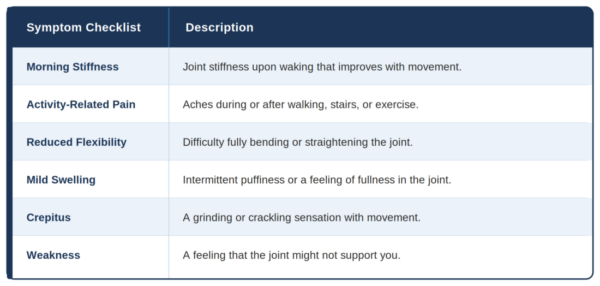
Stiffness After Rest
This is often called “start-up stiffness” and is a classic early sign. You might feel it most intensely in the morning when you first get out of bed or after sitting for an extended period, like at a desk or in a car. The stiffness usually eases after a few minutes of movement as the joint “warms up.”
Pain With or After Activity
You might notice a dull ache or sharp pain in a joint during or after activities like walking, climbing stairs, or squatting. This discomfort is different from the acute pain of an injury. It’s a reactive pain, indicating the joint is struggling to manage the load placed upon it.
Reduced Range of Motion
One of the more subtle early signs of joint wear is a loss of flexibility. You may find it slightly more difficult to bend or straighten your knee fully, or you might notice you can’t rotate your hip as far as you used to. This can be caused by cartilage loss, intermittent joint swelling, or degenerative changes in structures like the meniscus.
Swelling or Inflammation
Your joint might appear puffy or feel warm to the touch, especially after a period of increased activity. This swelling, or effusion, is caused by an increase in joint fluid due to the inflamed joint lining. One common complaint with knee arthritis is posterior knee or calf pain due to a Baker’s Cyst. This represents a collection of fluid behind the knee, which escapes the joint through a 1-way valve at the back of the knee. This phenomenon occurs due to inflammation and fluid production within the knee, rather than from the ‘cyst’ itself. It’s the body’s inflammatory response to joint irritation.
Grinding, Clicking or Crackling (Crepitus)
Crepitus is the medical term for the grinding, crackling, or popping sounds and sensations in a joint. While occasional joint popping is familiar, a persistent, grating sensation during movement can indicate that worn cartilage surfaces are rubbing against each other.
Weakness or Instability
You might feel that your knee or hip could “give way.” This sensation of instability can be due to pain signals temporarily causing your muscles to stop firing correctly (a process called reflex inhibition), or to muscle atrophy (weakness) that develops over time as you subconsciously avoid using the painful joint.
Early Signs in Specific Joints
While wear and tear can affect any joint, some are more commonly affected.
Knee Joint
Early wear and tear in the knee often begins in the medial compartment (the inner side).
- Symptoms: Pain on the inner side of the knee, difficulty with stairs (especially going down), and trouble rising from low chairs. You might develop a slight limp to offload the pain onto the other side.
- See more: Explore our Knee Pain page for detailed information.
Hip Joint
Hip degeneration often presents with pain in a location people don’t always expect.
- Symptoms: A dull ache in the groin or front of the thigh is a classic sign. You may also notice reduced hip rotation, making it difficult to put on socks and shoes, and stiffness when getting out of a car.
Shoulder
Wear and tear in the shoulder can limit your daily reach.
- Symptoms: Stiffness when reaching overhead or behind your back, clicks and discomfort with rotation, and a deep ache within the shoulder, especially at night.
What Causes Wear-and-Tear Damage?
Degenerative joint changes are caused by a combination of factors that increase joint stress over a lifetime.
- Ageing: Cartilage becomes less resilient and repairs itself more slowly as we get older.
- Previous Injuries: A history of a significant joint injury, such as an ACL tear or a meniscus injury, dramatically increases the risk of early osteoarthritis in that joint.
- Repetitive Load: Years of high-impact activities or occupations that involve frequent squatting, kneeling, or heavy lifting can accelerate cartilage wear.
- Genetics: Some people are genetically predisposed to developing osteoarthritis.
- Biomechanical Patterns: How you move matters. Factors like limb alignment, gait patterns, and muscle imbalances can place excessive load on specific parts of a joint.
When Wear-and-Tear Symptoms Should Be Assessed
It’s time to see a specialist when symptoms begin to interfere with your quality of life. Key clinical triggers include:
- Persistent swelling that doesn’t resolve with rest.
- Pain that impairs your ability to perform daily activities, such as walking or climbing stairs.
- Pain that wakes you up at night.
- A noticeable increase in stiffness or loss of mobility over 3 months.
- Any sensations of locking, catching, or instability in the joint.
If symptoms persist, local patients in Sydney’s Eastern or Southern Suburbs can access a specialist assessment to get a clear diagnosis and management plan. Ignoring these signs can allow the degenerative process to advance unchecked.
Diagnosis
A formal diagnosis provides clarity and guides treatment. The process typically involves:
- Physical Examination: A specialist will assess your joints’ range of motion, stability, and strength, and identify specific areas of tenderness.
- X-rays: These are the primary tool for diagnosing osteoarthritis. They can show narrowing of the joint space (indicating cartilage loss) and bone spurs.
- MRI: An MRI is more sensitive for diagnosing early degenerative changes. It can visualise cartilage thinning, bone marrow lesions, and damage to soft tissues like the meniscus long before changes are visible on an X-ray.
Early diagnosis is powerful. It enables proactive interventions that can slow disease progression, manage symptoms, and preserve your function for years to come.
Treatment Options for Early Degenerative Changes
Non-Surgical Treatment
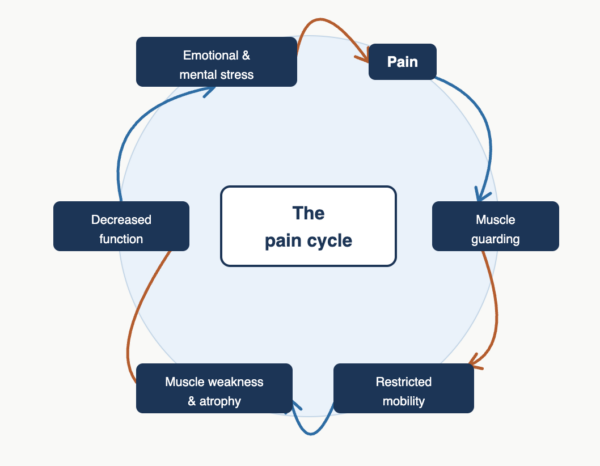
When a joint becomes painful, the body’s instinct is to protect it by moving less, resting it, and avoiding activities that cause pain. But as activity reduces, the muscles surrounding that joint begin to weaken from disuse. Weakened muscles provide less support, placing more stress directly on the joint itself.
Pain increases, movement reduces further, and the cycle continues. Re-engaging those muscles after a period of rest can itself be uncomfortable, which many patients interpret as a reason to avoid movement altogether. In most cases, the opposite is true.
This is why a multi-targeted approach is so important: first, modifying the activities that load the joint; then controlling inflammation; and finally, progressively building strength back when the time is right. Getting the sequence right and starting early is what makes the difference between managing this well and allowing it to worsen unchecked.
This is the cornerstone of managing early degenerative changes.
- Physiotherapy: A targeted exercise program can strengthen the muscles around the joint, improving support and reducing load.
- Weight Management: Even a small weight loss can significantly reduce pressure on weight-bearing joints like the hips and knees.
- Activity Modification: Swapping high-impact activities for low-impact options like swimming, cycling, or using an elliptical can reduce joint stress while maintaining fitness.
- Anti-inflammatory Strategies: This may include oral medications or, in some cases, joint injections to manage flare-ups.
When Surgery May Be Considered
Surgery is generally reserved for when conservative care no longer provides relief. For early to moderate wear, this may involve arthroscopic procedures to repair a related meniscus tear or address a specific cartilage defect. Joint replacement surgery is a highly successful option for end-stage arthritis, but it is not typically considered in the early stages.
How to Protect Your Joints Long-Term
You can take proactive steps to manage early wear and tear and maintain your mobility.
- Practical Checklist:
- Stay Active, But Smart: Choose low-impact activities you enjoy.
- Build Strength: Focus on strengthening the quadriceps, hamstrings, and glutes.
- Manage Your Load: Listen to your body. If an activity causes pain, modify it or take a break.
- Maintain a Healthy Weight: Reduce unnecessary stress on your joints.
- Prioritise Mobility: Incorporate regular stretching to maintain your range of motion.
When to See a Specialist
For adults noticing early stiffness, swelling, or reduced mobility, a specialist assessment helps diagnose wear-and-tear damage early and guide a management plan. Don’t dismiss persistent symptoms as just a part of getting older.
Book a Consultation
Dr Dan Cohen consults in Bondi Junction and Kogarah, offering assessment and management plans for early joint wear and tear and degenerative conditions. An accurate diagnosis is the first step toward creating a personalised strategy to keep you moving well for years to come.